


Automating Home-Sharing Operations: Building a Self Check-In and Cleaning System
Your property has to run even when the host isn't there. Build a four-step flow from booking to inspection.
2026.10.19
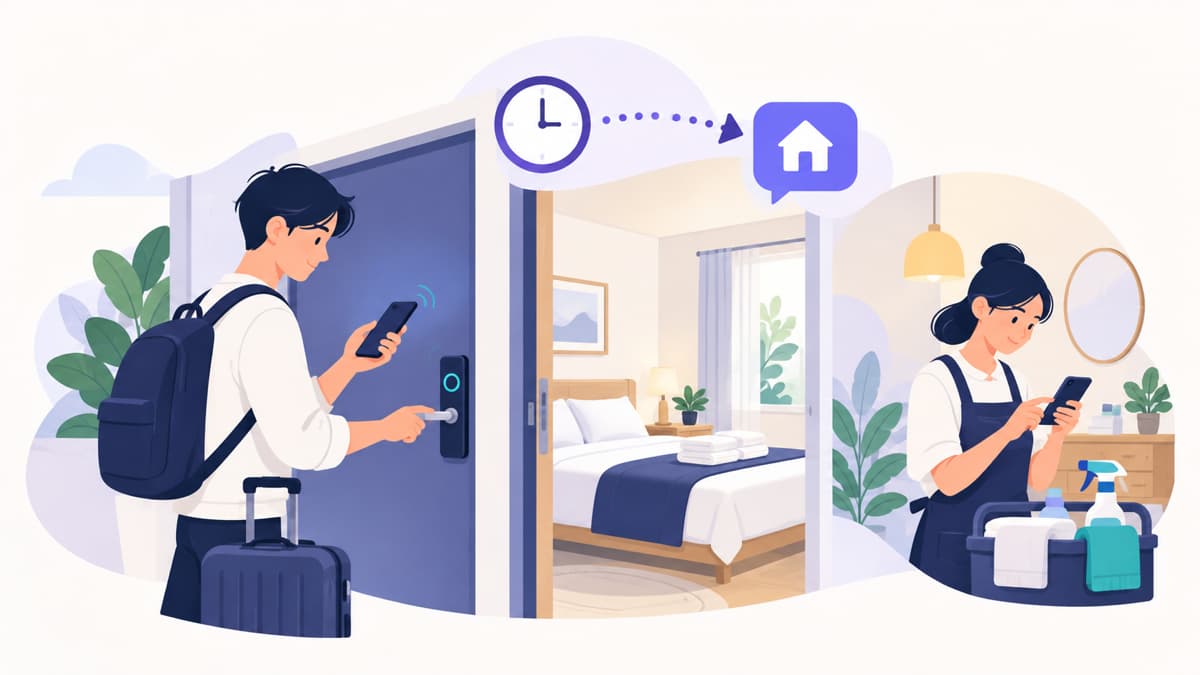
It's check-in time, but the host is away on other business. The guest is waiting at the door, and the room the previous guest just checked out of hasn't been cleaned yet. When operations only work if someone is physically on site, the host's workload grows with every additional booking. For small properties without an on-site host, rather than working harder at each individual task, you first need to define the sequence in which tasks flow from one to the next.
🧭 Divide Operations into Four Steps
Step | Tasks | Automation point |
1Booking confirmation | Check booking details and number of guests | Prepare a confirmation message template |
2Check-in instructions | Send entry instructions, parking and house rules | Schedule instructions to send the day before and the day of arrival |
3Check-out & cleaning | Confirm check-out and assign cleaning staff | Share the cleaning schedule based on check-out time |
4Inspection | Check cleaning quality and supplies | Photo report for each inspection item |
🔀 Comparing Self Check-In Methods
Method | Pros | Cons |
Smart lock | Easy to change the code for each booking; no on-site handover needed | Battery and connectivity must be checked regularly; initial installation required |
Key box | Simple to install; less reliance on electronics | Security weakens if the code isn't changed; risk of lost keys |
In-person handover by a representative | Warm guest service; issues can be spotted immediately | Timing must be coordinated, adding labor costs and scheduling burden |
Whichever method you choose, whether it can be installed may differ depending on the building type, so check the building's management rules or your lease terms first. Entry information and guest contact details are personal information, so also check the applicable standards for how you store them. Business registration issues are covered separately in Business Registration Issues When Listing Home-Sharing on OTAs.
✅ Cleaning Staff Scheduling Checklist
Confirm there is enough cleaning time between check-out and the next check-in.
You have backup staff in case your cleaner suddenly can't come.
You've defined what "cleaning complete" means with a photo checklist.
You have minimum stock levels for supplies such as towels and toilet paper.
There is a set channel for reporting damage or missing items when found.
On channels where video comes first, such as Tripbtoz, an OTA that expands exposure based on video reviews, any gap between what's shown in the video and the actual condition of the property quickly turns into complaints. If you align your cleaning inspection standards with how the property looks in the video, it's easier to stay consistent in reviews.
💬 Structure Guest Messages in Four Parts
Confirmation: Greet the guest and confirm the booking dates and number of guests.
Entry: Send the entry method and access code just before check-in.
Stay: Briefly summarize rules on parking, noise, trash disposal and so on.
Check-out: Include the check-out time, how to tidy up, and who to contact if a problem arises.
Rather than sending one long message all at once, splitting messages by timing makes them easier to read. If your flow isn't in place yet, try writing it out for your next booking using the four steps above. When you notice recurring questions, start by turning those into templates.