


Hanok Stay Foreign Guest Service Guide
Where do I take off my shoes? Isn't the floor cold? Answering frequently asked questions first makes it easier to respond.
2026.10.19
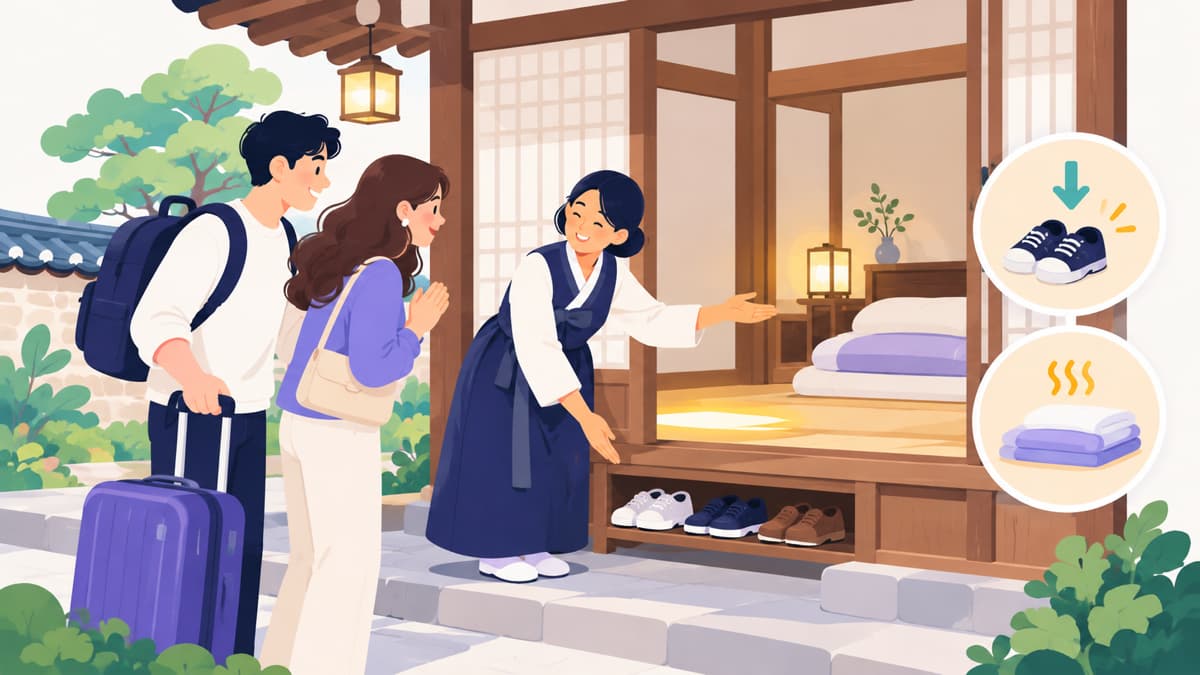
The night before the reservation, I received a message from an international guest. “Where do I take off my shoes? Isn't the floor cold?” Hanok is a space familiar to the owner, but there are many questions for first-time visitors. If the answer is late or vague, it's easy for guests to switch to a different place. If you organize frequently asked questions in advance, it will be easier to respond.
🌏 Why is inbound demand flocking to hanok
Hanok is known as one of the few types of lodging where you can experience Korean architecture and lifestyle firsthand while staying. Elements such as the courtyard, wooden structure, and heated floor are also motivating for visits because they are easy to share with photos and videos. The demand to stay in one area in combination with experiences such as tea ceremony and crafts is also constantly mentioned. The experience of staying there itself is a prize, so it's clear what to look forward to even before you arrive. Explaining the difference between expectations and actual structure in advance is the starting point of response. For this reason, foreign guests tend to view hanok as an experience rather than a place to stay.
💭 Frequently asked questions from foreign guests
If you know the question in advance, you can put the answer first in the notice.
questions | What to include in the guide |
Ondol | Floor heating method, seasonal experience, bedding type (whether it's a futon or bed) |
shoe | Where to take off, whether indoor shoes are provided |
bathrooms | Whether it's inside a room or in a separate space, and how to use hot water |
Noise rules | The fact that sound can be transmitted well due to the wooden structure, quiet time zones, and yard usage rules |
How to check in | Information on arrival times, directions, face-to-face or non-face-to-face, means of contact |
Check the instructions from the competent local government and relevant agencies to confirm the identity required at the time of check-in.
📋 Multilingual notice checklist and message response structure
Is the content in each language the same
Do you show me a picture of the location where you take off your shoes and the heated room
Does it include maps, public transportation directions, and emergency contact information
Did you write simple sentences and explain unique Korean expressions by unraveling them
Did you explain the characteristics of hanok as a characteristic rather than an inconvenience
Is there a way to contact them if the arrival is delayed
Keep sentences short, and include only one thing in one sentence. Even if I use a translator, I check key words such as shoes and warm clothes for myself. If the same question is repeated several times, post it in a notice.
It's more important to write a pre-booking message so guests know what to do next than to write a long message. If you use the following sequence as a basic framework, you can answer consistently even in different languages.
Greet and confirm reservation
Answers to questions (from the core)
Things to know ahead of time (shoes, noise, check in)
Arrival information (location, time, contact information)
More information on inquiries
OTAs such as Tripbitos, which are based on video reviews, can preview the space with a video, which can help reduce repetitive questions such as where to take off shoes or heated rooms.
Responding to foreign guests is divided by preparing to anticipate questions before translation skills.